Ashwagandha (Withania somnifera): How to Grow, Harvest, Dry, and Use This Ayurvedic Adaptogen
Updated: Feb 5
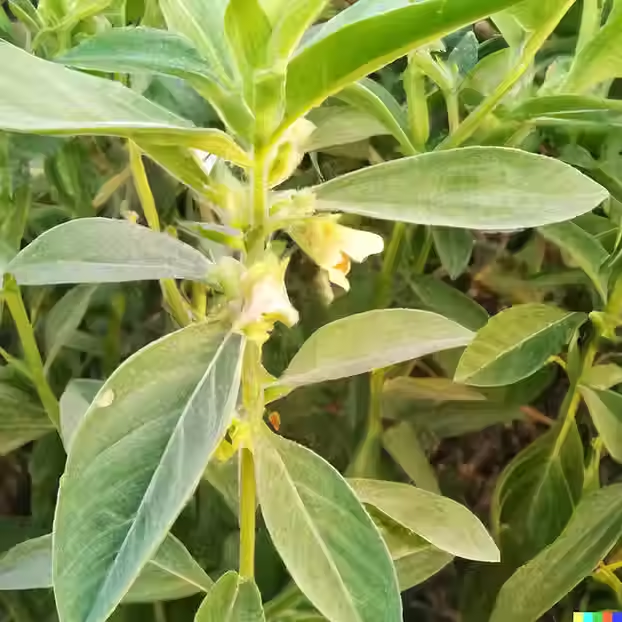
In our fast-paced world, where stress often feels like a constant companion, finding natural ways to support calm and resilience matters more than ever. Enter ashwagandha (Withania somnifera)—a powerful adaptogen used for thousands of years in Ayurvedic medicine to rejuvenate and restore. This guide walks you through every step of growing, harvesting, drying, and using ashwagandha to its full potential—so you can build real self-sufficiency with one of Ayurveda’s most iconic herbs.
(If you’re building a sleep-focused routine, see our valerian articles too—ashwagandha and valerian often live in the same “evening cabinet,” just for different reasons.)
Cultivating Your Own Ashwagandha Garden
Growing ashwagandha starts with sun and soil.
Choose a sunny location. Ashwagandha thrives with ample sunlight, reflecting its natural habitat.
Use well-draining soil. Aim for soil that drains easily and is slightly sandy or stony. Avoid overly moist conditions, which can contribute to root rot.
Planting depth and spacing: Plant seeds about 2 inches apart and cover lightly—no more than ½ inch deep.
Watering approach: Less is more. Ashwagandha prefers drier conditions, so use a minimal watering approach.
When to expect sprouts: Keep watch for seedlings within about two weeks (a fortnight)—that’s usually your first sign the journey is underway.
Cool climate note: Ashwagandha is sensitive to cold. In cooler climates, start seeds indoors and transplant after the threat of frost has passed, giving your plants the warm conditions they need to flourish.
Harvesting and Storing Your Bounty
Ashwagandha harvest time is usually late fall, and your plant gives you a visual cue:
Harvest signal: When the berries turn a vibrant red, it’s time.
How to harvest the roots (gently):
Carefully excavate to avoid damaging roots.
Knock off soil by lightly tapping.
Rinse gently to remove remaining dirt.
Fresh vs dried roots:
Fresh roots can be used right away for tinctures or decoctions.
If you plan to dry the roots for future use, prep them promptly.
Storage (for dried root):
Keep dried root away from light and moisture
Use airtight containers
Stored properly, dried ashwagandha root can remain potent for up to two years
Don’t forget to store those seeds
Save your seed pods—this matters for self-sufficiency.
The pods contain multiple small berries that hold the seeds. One or two plants can produce enough seed to grow a substantial home crop next year. Save that money where you can.
Drying Ashwagandha for Medicinal Use
Drying is where you protect the herb’s usefulness.
Slice roots thinly to promote even drying.
Spread slices on a clean surface in a warm area out of direct sunlight (direct sun can degrade beneficial compounds).
Turn regularly for uniform drying.
Timing: Drying may take up to two weeks depending on humidity and temperature.
When the slices are crisply dry, they’re ready for:
storage
powdering
tinctures
decoctions
This careful drying helps preserve ashwagandha’s adaptogenic qualities, so it’s available as a reliable wellness resource when you need it.
Medicinal Uses of Ashwagandha
Ashwagandha is celebrated for a wide range of traditional and modern wellness uses.
It is best known as an adaptogen, supporting the body’s ability to respond to stress. It is also commonly used to:
enhance sleep quality
reduce symptoms of anxiety and insomnia
support energy and stamina
provide immunomodulatory support to immune defenses
support regulation of blood glucose levels, which may be helpful in diabetes management
support thyroid hormone balance, making it relevant for people with thyroid disorders
support people dealing with fatigue
and it’s sometimes used by individuals navigating bipolar disorder
As a general tonic, ashwagandha is widely valued for overall vitality and resilience—one reason it remains a cornerstone herb in the herbal medicine world.
Crafting Ashwagandha Tinctures and Decoctions
Ashwagandha is versatile: you can prepare it as an alcohol extract (tincture) or a non-alcohol brew (decoction).
How to make an Ashwagandha tincture
Finely chop dried roots to improve extraction.
Place in a jar.
Cover completely with high-proof alcohol.
Seal the lid and store away from direct light for 6–8 weeks.
Shake occasionally to help extraction.
Strain out plant material—your tincture is ready.
How to make an Ashwagandha decoction (non-alcohol)
Combine 1 tablespoon powdered root with 2 cups water.
Gently simmer until volume reduces by half.
Strain.
Both preparations are traditional ways to harness the root’s adaptogenic properties and incorporate this ancient herb into modern routines.
How to Powder and Encapsulate Ashwagandha
If you want convenience and flexible dosing, powdering is the bridge.
Powdering
Ensure the roots are completely dry.
Grind using a coffee grinder or high-powered food processor.
Grind until a fine powder forms.
You can take the powder in water or tea, or use it for recipes.
Encapsulating
For a more precise and taste-free method:
Use a home capsule machine.
Fill empty capsules with powder according to the machine’s instructions.
This DIY method lets you create custom doses suited to individual needs, without the taste or prep time of other forms.
Ayurvedic Practitioners’ Perspective on Ashwagandha
Ayurvedic practitioners value ashwagandha for its adaptogenic qualities within Ayurveda’s holistic approach to balancing mind, body, and spirit.
Traditionally, it is:
considered vital in the Ayurvedic pharmacopeia
used for pacifying Vata and Kapha imbalances
used to promote longevity and vitality
valued for calming effects on the nervous system
used to strengthen immune function
used to support stress and fatigue resilience
Typical approach: Start with a small dose and adjust based on the individual’s response and constitution.
A crucial dosage point you included (kept verbatim in meaning)
In Ayurvedic practice, the typical dose is often much higher than what fits in a capsule—or even a tincture. What you buy in a bottle from a local health store or online is often best suited for daily maintenance. To support a condition, powdered herb is recommended, sometimes in doses from 5 g up to 30 g.
Ashwagandha is also frequently combined with other herbs in personalized formulations—one of Ayurveda’s defining strengths.
A Nourishing Ashwagandha Recipe to Try at Home (Golden Milk)
Here’s a simple way to make ashwagandha part of a daily ritual:
Warm 1 cup milk (almond, coconut, or cow’s milk).
Whisk in ½ teaspoon ashwagandha powder.
Add:
¼ teaspoon turmeric
a pinch of black pepper (for turmeric absorption)
a little ginger powder (optional, for extra warmth)
Sweeten with 1 teaspoon honey or maple syrup, to taste.
Enjoy in the evening to support relaxation and prepare for restorative sleep. It’s comforting, tasty, and a practical way to use ashwagandha consistently.
Disclaimer: This Is Not Medical Advice
Nothing on this page or on this site is meant to diagnose, treat, or cure any condition, illness, or disease. The content provided in this blog post serves solely for educational and informational purposes and should not be construed as medical advice. Nothing stated here or anywhere on this site should be interpreted as a replacement for professional healthcare advice or as a treatment plan for any specific health condition. We strongly encourage you to seek the guidance of a qualified health professional before incorporating any new plant or herb into your health regimen. This is particularly important for those who are pregnant, breastfeeding, or managing existing health issues. Our aim is to inform and inspire a natural approach to supporting wellness, but it's crucial to proceed with caution and informed knowledge, especially when exploring treatments involving medicinal plants and herbs.


